Exploring Device Compatibility Factors Affecting Deposit Success Rates in Legally Operating Mobile Betting Systems
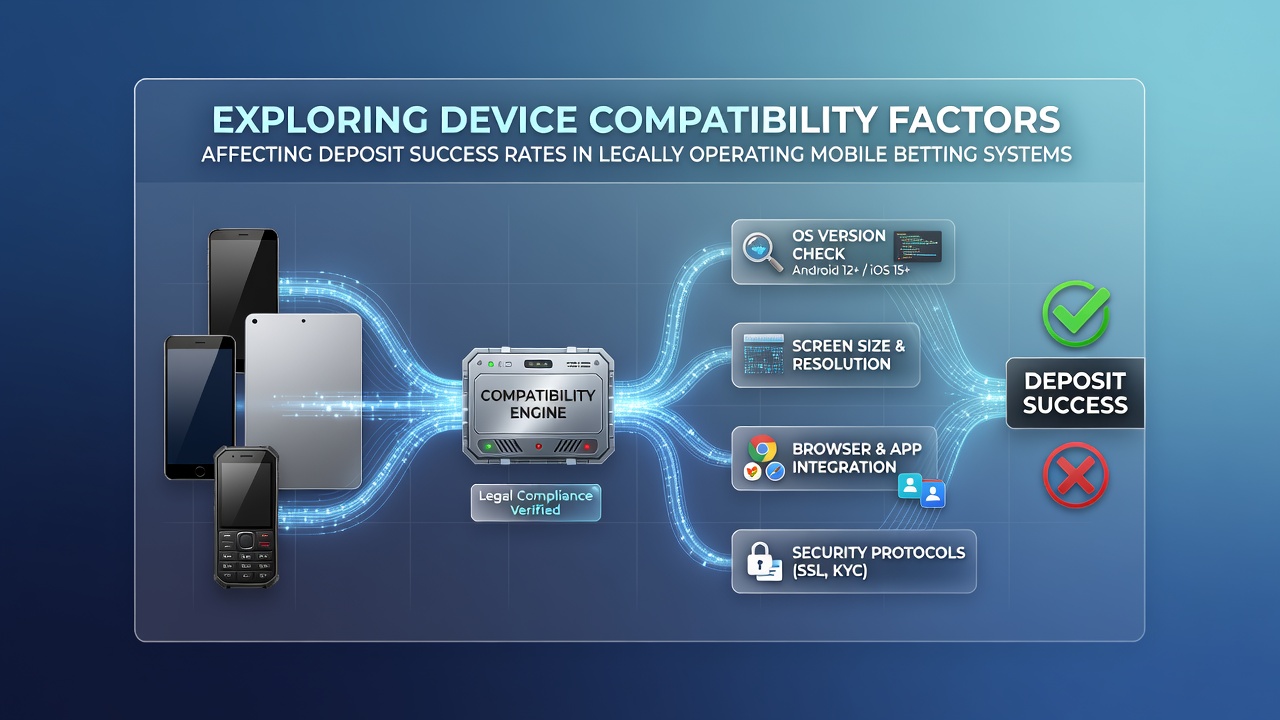
Device compatibility stands as a central element in the performance of deposit functions within state-regulated mobile betting platforms, where operating system versions, hardware specifications, and integration protocols directly shape transaction outcomes across jurisdictions. Research from regulatory bodies indicates that variations in success rates often trace back to mismatches between app requirements and device capabilities, particularly as operators expand services into new markets during 2026.
Operating System Versions and Update Cycles
Android and iOS platforms present distinct compatibility challenges that affect deposit processing, since fragmented OS versions create inconsistencies in how payment gateways authenticate and execute transfers. Data from multiple state licensing agencies shows higher failure rates on older Android builds compared to current releases, while iOS users encounter fewer interruptions once devices receive timely updates. Observers note that operators must maintain separate testing protocols for each ecosystem, because security patches introduced in mid-2026 altered encryption handshakes for certain payment processors.
Hardware Specifications and Resource Allocation
Processors, RAM capacity, and storage availability influence how mobile betting applications handle secure connections during deposits, with lower-spec devices sometimes struggling to maintain stable sessions when multi-factor authentication layers activate. Industry reports compiled across North American and Australian markets reveal that devices with less than 4GB of RAM experience elevated timeout incidents when interfacing with real-time banking APIs. Those who manage platform infrastructure find that hardware constraints become especially pronounced during peak event periods when concurrent user loads increase.
Payment Gateway Integrations Across Device Types
Compatibility between device-native payment tools and licensed sportsbook applications determines whether deposits complete without redirection errors or security flag triggers. Figures from government oversight bodies demonstrate that Apple Pay integrations achieve higher consistency on supported iOS hardware, whereas Android equivalents such as Google Pay require additional configuration steps on certain manufacturers' models. One analysis covering operations through July 2026 highlighted that regional banking partners impose device certification requirements that vary by jurisdiction, leading operators to restrict certain methods on unverified hardware.

Network Conditions and Device-Specific Protocols
Wireless connectivity standards and cellular fallback behaviors interact with device firmware to affect deposit reliability, especially when applications switch between Wi-Fi and mobile data mid-transaction. Studies conducted by research institutions in Europe and Canada indicate that certain modem chipsets handle secure socket layer negotiations differently, resulting in intermittent packet loss that disrupts payment confirmations. Regulated operators respond by embedding adaptive retry mechanisms that account for these hardware variations without compromising compliance standards.
Security Feature Implementation and Biometric Authentication
Biometric sensors and hardware-backed key storage modules introduce another layer of compatibility considerations, because deposit flows often require device-level verification before funds transfer. Data aggregated from licensed platforms shows that fingerprint or facial recognition failures on specific device models correlate with abandoned transactions, prompting developers to offer fallback PIN options that still meet regulatory audit trails. Experts tracking these patterns across multiple states observe that firmware updates released after January 2026 improved sensor reliability on flagship devices while older models continued to lag.
Regulatory Standards and Certification Requirements
Jurisdictional rules establish minimum technical benchmarks that betting applications must satisfy before deployment, including device compatibility testing matrices submitted during licensing renewals. According to records maintained by the New Jersey Division of Gaming Enforcement, platforms undergo periodic reviews that flag underperforming device classes and mandate remediation plans. Similar frameworks in Victoria, Australia, require ongoing monitoring of transaction success metrics segmented by hardware, ensuring operators address emerging compatibility gaps promptly.
Conclusion
Device compatibility factors continue to shape deposit success rates in legally operating mobile betting systems through the interplay of software versions, hardware capabilities, payment integrations, and regulatory mandates. Reports compiled as of July 2026 underscore the need for sustained testing and adaptive development practices that accommodate the evolving device landscape while maintaining compliance across regions. Operators who align their systems with these technical realities achieve more consistent transaction outcomes, supporting broader user access within authorized markets.