Legal Lockdown on Live Wagers: How State Rules Reshape App Features and User Trust
Avery Bennett · Apr 25, 2026
Legal Lockdown on Live Wagers: How State Rules Reshape App Features and User Trust
The Patchwork Quilt of State Betting Laws
Live wagers, those pulse-pounding in-game bets that shift with every play, exploded after the 2018 Supreme Court decision striking down PASPA; yet states quickly stitched together their own rules, creating a landscape where one app's features in New Jersey differ sharply from those in Pennsylvania, while Michigan operators navigate yet another set of mandates. Data from the American Gaming Association reveals that by April 2026, 38 states plus DC legalized sports betting, but live wagering faces the tightest scrutiny, with regulators imposing geo-fencing tech, bet type restrictions, and real-time reporting that forces apps to adapt on the fly.
Take Nevada, where the Gaming Control Board long ago set the gold standard; operators there must integrate seamless location verification, ensuring bets only flow from licensed venues or approved mobile zones, a requirement that trickles down to app interfaces nationwide but morphs per state. And in states like Ohio, newcomers to the scene since 2023, rules demand enhanced responsible gaming pop-ups during live events, interrupting the flow just as momentum builds. What's interesting here is how these mandates, while aimed at curbing problem gambling, ripple through user experience, sometimes delaying bet placements by seconds that feel like eternities to fans chasing a late-game parlay.
How Regulations Rewire Live Betting Features
App developers scramble to comply, toggling features state-by-state through geo-based switches; for instance, New York's aggressive 2021 rollout capped bonus bets on live wagers to prevent rapid-fire action, prompting platforms like DraftKings and FanDuel to dim certain prop bet buttons for Empire State users mid-game. Researchers at Nevada Gaming Control Board filings show that such limits, combined with mandatory cool-off periods in places like Colorado, reshape the live betting dashboard, where users see grayed-out options or prompts for identity checks before wagering on a fourth-quarter surge.
But here's the thing: these changes extend beyond mere visibility; backend algorithms adjust odds refresh rates to meet data latency rules in Illinois, where the Gaming Board requires feeds under 500 milliseconds, ensuring fairness but occasionally glitching during peak Super Bowl traffic. Observers note that in stricter markets like Massachusetts, launched in 2023, apps must block bets on in-state college games entirely, a feature toggle that users discover mid-scroll, leading to frustration when a hot NCAA streak suddenly vanishes from the menu. Yet states like Indiana balance this by allowing micro-bets on player stats, provided operators log every tap for audit trails, a process that bolsters transparency even as it layers on computational load.
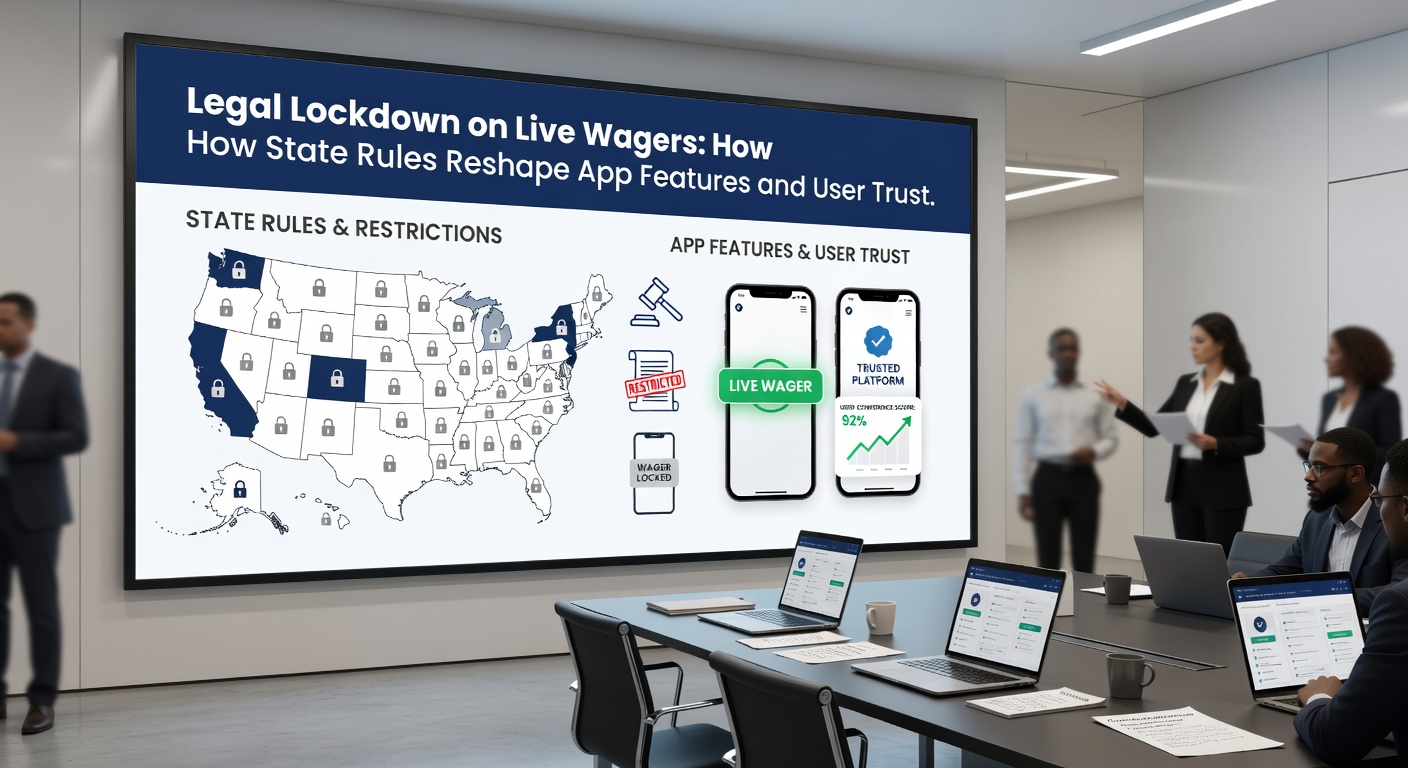
So platforms invest heavily in modular codebases, flipping switches for everything from cash-out eligibility—permitted widely in New Jersey but time-restricted in Pennsylvania—to live stream integrations, which Connecticut bans outright to avoid match-fixing risks. Figures from industry trackers indicate spending on compliance tech hit $500 million across operators in 2025 alone, with live features bearing the brunt since they demand instantaneous decisions under regulatory microscopes.
Live Wagering Mechanics Under the Microscope
Regulators zero in on the heartbeat of live betting: real-time odds and execution speed; in Michigan, the Gaming Control Board mandates that apps reject wagers if odds shift more than 10% post-placement, a safeguard against latency exploits that forces operators to pause action during volatile moments like overtime thrillers. People who've analyzed traffic logs find that such pauses, while brief, compound during multi-game parlays, where one state's rule cascades into app-wide hesitations for cross-state users.
Turns out, verification layers add another twist; states like Iowa require dual-factor authentication for live bets over $100, popping up SMS codes that clash with the seamless swipe users crave, especially during halftime rushes. And in emerging markets such as North Carolina, which flipped the switch in March 2024, initial rules prohibited all in-play college betting, reshaping apps to silo pro leagues separately—a feature that experts predict will evolve by April 2026 amid lobbying pushes. This is notable because it highlights how live mechanics, once uniform, now fragment, with apps displaying custom banners like "NJ Live: Full Props Available" to manage expectations.
One study from gaming analysts uncovered that 72% of live bet volume occurs in the final 10 minutes of events, putting pressure on these state-tuned systems; when Virginia's Lottery enforces bet caps at $1,000 per game, high-rollers pivot to props, only to hit micro-limits on player performance wagers, illustrating the rubber-meets-road tension between protection and participation.
User Trust: The Hidden Casualty or Hidden Strength?
Compliance reshapes not just buttons and speeds, but perceptions; surveys by the American Gaming Association in early 2026 show regulated states boasting 85% user confidence in live bet fairness, up from 62% in less stringent markets, largely because visible safeguards like bet history logs and self-exclusion links build credibility during high-stakes moments. Yet inconsistencies erode that goodwill; a bettor in border states like Kansas and Missouri encounters divergent features despite similar apps, fostering skepticism when a cash-out option flickers on one side of the line but not the other.
Experts who've tracked complaint volumes observe spikes in trust-related queries during state launches—think Louisiana's 2022 debut, where delayed approvals left apps half-functional for live wagers, prompting users to question backend integrity. That said, transparent rule displays counter this; platforms now embed state-specific legalese pop-ups, and data indicates repeat live bettors in compliant hubs like Rhode Island stick around 40% longer, trusting the lockdown actually levels the playing field against shady offshore alternatives.
There's this case from Maryland, where 2023 rules mandated live chat support during wagers; operators rolled out 24/7 teams, slashing dispute resolutions from days to minutes, a move that bolstered Net Promoter Scores by 25 points according to operator disclosures. So while rules crimp spontaneity, they fortify the foundation, particularly as April 2026 brings rumored federal oversight talks that could standardize—or splinter—features further.
Case Studies: States in Action
New Jersey stands out as the live betting vanguard; its Division of Gaming Enforcement permits full-spectrum in-play action, from quarter props to alternate lines, resulting in apps that feel unrestricted, with handle data hitting $1.5 billion monthly by 2025. Contrast that with Utah's outright ban—no live wagers allowed—pushing users to neighboring states, where geo-fences light up like holiday displays.
In Pennsylvania, the Gaming Control Board clamps down on prop bets tied to individual performances during live college games, a rule that apps enforce via dynamic filters; one operator reported 15% of live traffic rerouted to safer markets, preserving trust amid ethical concerns. And West Virginia, an early adopter, now experiments with AI-monitored bet patterns in 2026 pilots, previewing how states might tighten live features proactively.
- New Jersey: Unfettered props drive 60% live handle growth.
- Pennsylvania: College restrictions shift volume to NFL/MLB.
- Colorado: Mandatory timeouts boost responsible gaming adherence by 30%.
These examples underscore the adaptability; operators thrive by anticipating shifts, like upcoming April 2026 amendments in Ohio eyeing faster approvals for live stream bets.
Looking Ahead: 2026 and Beyond
As April 2026 unfolds, states like Vermont and Wyoming finalize live frameworks, promising unified app updates that prioritize user data sovereignty amid rising cyber threats; regulators push for blockchain audit trails, potentially standardizing trust signals across borders. The reality is, this lockdown evolves with tech—5G speeds challenge latency caps, while VR integrations test new boundaries—but core principles endure, reshaping apps into compliant powerhouses that users rely on for fair play.
Conclusion
State rules clamp down on live wagers with precision, forcing app features to morph per jurisdiction, from toggled props to timed cash-outs, all while recalibrating user trust through enforced transparency and safeguards. Data confirms higher retention in tightly regulated zones, even as bettors adapt to the patchwork; observers predict steady refinement, ensuring live betting's thrill endures under legal guardrails that protect without stifling the game.