Regulatory Influences on Reward Processing Speeds Within Legal Mobile Sportsbook Ecosystems
Paul Schröder · Jul 13, 2026
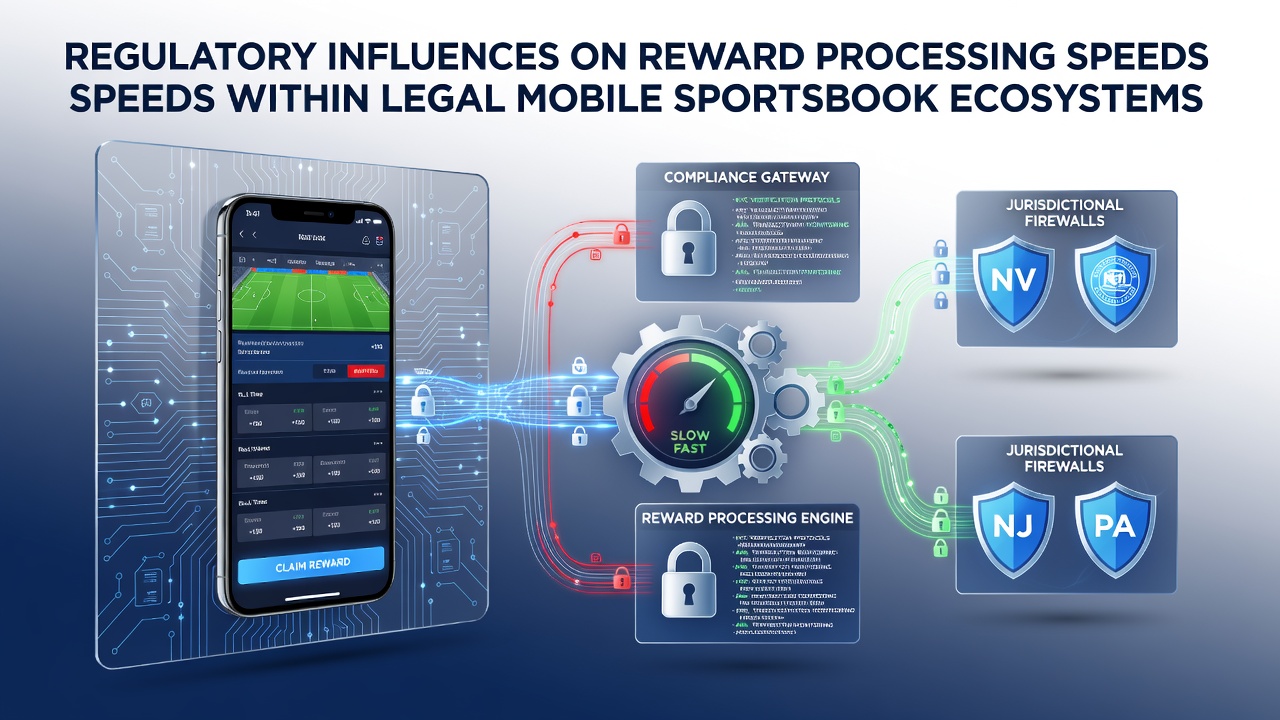
Regulatory Influences on Reward Processing Speeds Within Legal Mobile Sportsbook Ecosystems
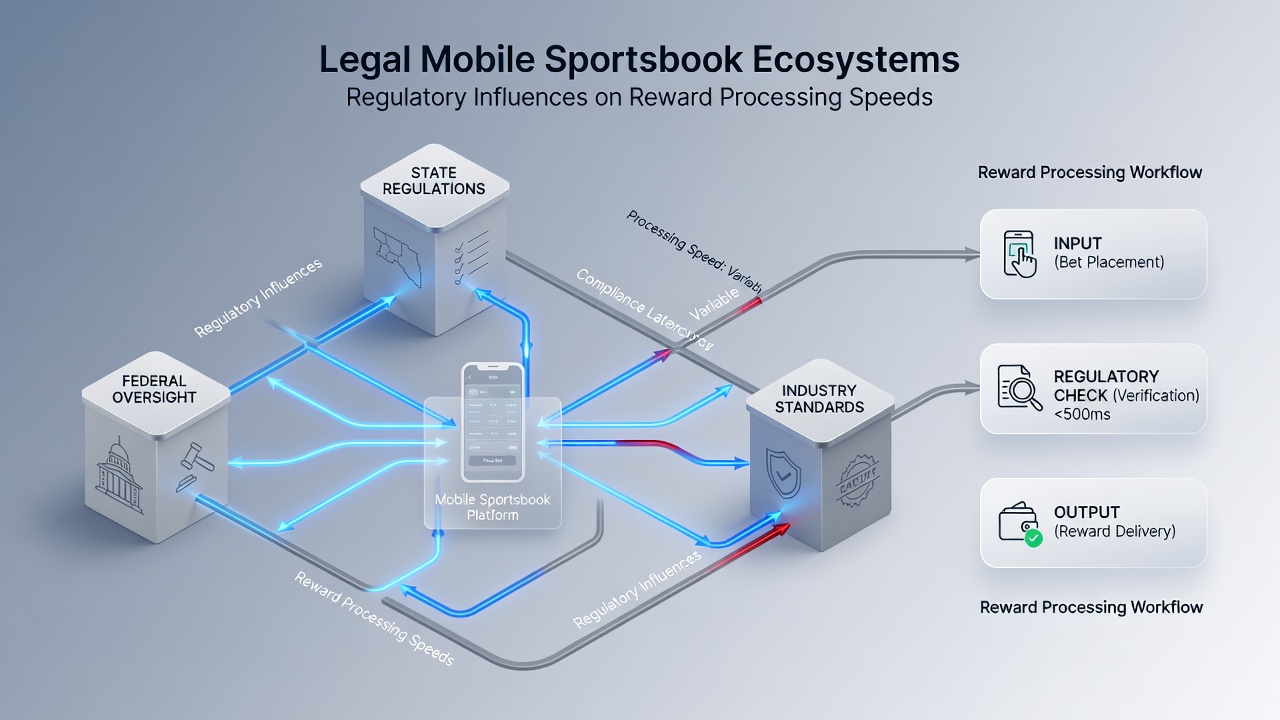
Legal mobile sportsbook platforms operate under layers of oversight that directly shape how quickly promotional rewards reach user accounts, and those rules vary sharply across jurisdictions. Compliance teams must align bonus activation sequences with identity verification mandates, anti-money laundering checks, and jurisdiction-specific payout windows, which together create measurable differences in processing durations.
Core Regulatory Mechanisms Affecting Reward Timelines
State licensing agreements routinely embed explicit requirements for reward distribution intervals, forcing operators to route every bonus claim through automated compliance filters before funds appear in betting wallets. These filters cross-reference transaction histories against centralized databases, a step that adds predictable latency even when mobile applications are optimized for speed. Observers note that platforms in tightly regulated markets often batch reward approvals at set intervals to satisfy reporting obligations, whereas less prescriptive environments allow near-instant crediting once initial verification clears.
Data compiled by the Pennsylvania Gaming Control Board shows that operators must complete enhanced due diligence on reward claims exceeding defined thresholds within four hours during peak periods, a rule that has prompted several apps to integrate real-time document scanning directly into their mobile interfaces. Similar provisions appear in other U.S. states that updated their technical standards ahead of the July 2026 regulatory review cycle, requiring operators to log every processing delay and submit summaries quarterly.
Verification Protocols and Their Direct Impact on Speed
Know-your-customer procedures sit at the center of reward processing bottlenecks because regulators mandate that bonus eligibility be confirmed against government-issued identification before any value is released. Mobile operators have responded by embedding biometric checks and third-party database queries into the same workflow that handles reward redemptions, yet these sequential steps still extend average completion times from seconds to several minutes in many cases. Research from academic centers tracking iGaming compliance indicates that jurisdictions enforcing multi-factor address validation experience the longest average reward processing windows, sometimes stretching beyond the same-day thresholds that users encounter in more streamlined markets.
Canadian provinces that adopted centralized player registries have documented a measurable compression in reward delivery times after the registries went live, because operators can pull verified data instantly rather than requesting fresh documentation for each bonus. Those who've examined transaction logs across multiple provinces report that reward processing in Ontario now averages under ninety seconds when accounts are already flagged as fully compliant, while new accounts still face extended windows that satisfy provincial audit trails.
Cross-Border Comparisons and July 2026 Updates
European frameworks outside the United Kingdom have introduced tiered reward processing rules that scale verification intensity according to transaction size, producing distinct speed profiles across member states. Australian state regulators, including the Victorian Commission for Gambling and Liquor Regulation, require operators to publish average reward fulfillment statistics monthly, creating public benchmarks that reveal how compliance overhead influences user-facing timelines. These disclosures show consistent patterns where smaller promotional credits clear faster than larger loyalty redemptions because the latter trigger additional source-of-funds reviews.
By July 2026 several U.S. states had synchronized their mobile technical standards with federal financial reporting expectations, resulting in unified data fields that operators must populate before rewards finalize. The harmonization reduced duplicate data entry for multi-state platforms but also introduced a new layer of automated flags that pause processing whenever risk scores exceed preset limits. Operators that invested in predictive compliance engines report shorter average delays compared with those still relying on manual review queues.
Operational Adjustments Within Mobile Interfaces
Developers have redesigned account dashboards to surface real-time status indicators that tell users exactly where a reward sits in the regulatory queue, reducing support ticket volume while satisfying transparency mandates. These indicators draw from the same compliance engines that enforce jurisdiction-specific rules, so the displayed time estimates reflect actual regulatory constraints rather than marketing promises. One study of user interaction logs revealed that platforms displaying accurate regulatory wait times retained higher session completion rates because expectations aligned with observed outcomes.
Payment gateway integrations have also evolved to accommodate regulatory hold periods, with some providers now offering parallel processing lanes that separate routine deposits from reward-related movements. This architectural shift allows operators to maintain overall platform velocity while isolating the slower verification paths required for certain bonus types. Figures released by industry research groups confirm that such segmented architectures have narrowed the gap between advertised and actual reward delivery speeds across multiple licensed markets.
Conclusion
Regulatory frameworks continue to set the outer boundaries on reward processing speeds inside legal mobile sportsbook ecosystems, and operators respond by refining verification pipelines and interface feedback mechanisms. The patterns observed through mid-2026 demonstrate that states with centralized data resources and clear reporting intervals achieve more predictable timelines, while those relying on sequential manual checks still contend with longer average durations. Continued alignment between technical standards and compliance obligations will likely determine how these speeds evolve in subsequent regulatory cycles.